Anthropic Isn't Building a New Model — It's Building a Workbench for Scientists. That's the Real Strategic Bet.
A Launch Event Without a Model
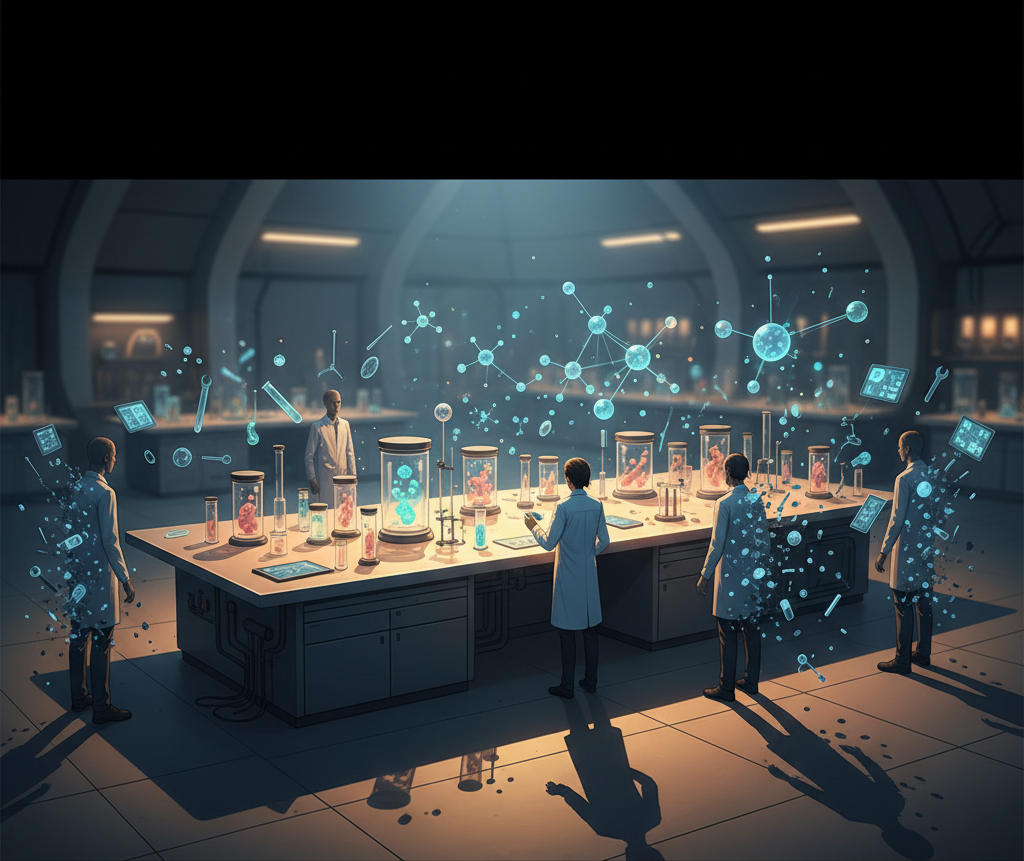
In the AI landscape of 2026, a new model announces a "breakthrough" almost every few weeks. Against this backdrop, Anthropic's choice looks decidedly unconventional — what they unveiled wasn't Claude 4.5 or some new version, but a scientific workbench called Claude Science.
The platform's core concept is straightforward: give scientific researchers an integrated environment where they can complete the entire workflow — from literature review, hypothesis generation, and data analysis to manuscript drafting — without constantly switching between a dozen different tools. In other words, what Anthropic is selling this time isn't "smarter AI," but "smoother workflows."
This shift deserves serious attention, because it reveals how Anthropic reads the broader market.
Why Scientific Researchers Merit Their Own Category
Before discussing the strategic significance of Claude Science, one thing needs to be clarified: scientific researchers are not simply "an upgraded version of general knowledge workers" — they represent an entirely different use case.
Most knowledge workers use AI to handle tasks with clear answers or defined formats — writing reports, organizing emails, generating presentation outlines. But the essence of scientific research is advancing through uncertainty: literature may contradict itself, hypotheses require repeated revision, and data demands multiple rounds of interpretation. This process is fundamentally nonlinear and iterative, with virtually zero tolerance for hallucination.
General-purpose AI tools have a fundamental problem in this context: they are too eager to please. When faced with an ambiguous scientific question, ChatGPT or Gemini tends to produce answers that sound plausible — but what scientists need isn't a "plausible answer." They need answers that are sourced, traceable, and open to challenge.
If Claude Science can genuinely solve this problem, its market isn't merely "users who are scientists" — it's the foundational infrastructure for all rigorous knowledge work.
The Deeper Logic Behind the "Workbench" Strategy
From a product strategy perspective, what Anthropic has done here follows a clear chain of reasoning.
The first layer: reducing switching costs. A scientist's current workflow is fragmented — PubMed for literature, Python for data, Overleaf for writing, Zotero for references. Claude Science aims to become the adhesive layer binding these steps together, allowing Claude's capabilities to connect within a single environment, rather than leaving users to wire everything up themselves via API.
The second layer: establishing professional credibility. The brand promise of general-purpose AI is "can do anything" — but the scientific community harbors a natural skepticism toward "can do anything." A tool designed specifically for scientific research, with an emphasis on citation tracking and reasoning transparency, carries an entirely different kind of credibility in academic circles. This is brand differentiation, not just feature differentiation.
The third layer: a moat built on data and feedback. This is the hardest layer to quantify, yet the most important. As large volumes of real scientific research workflows run through Claude Science, the feedback data Anthropic receives will be highly specialized, dense, and high quality. That data, in turn, can strengthen the model's scientific reasoning capabilities — creating an advantage that competitors will struggle to replicate quickly.
Where Does This Bet Carry Risk?
A clear strategy doesn't guarantee clean execution. I see at least three variables worth watching.
First: academic adoption has historically been slow. Scientists are deeply conservative users. New tools typically take years to diffuse through the community, and usually require endorsement from leading laboratories before a follow-on effect takes hold. Anthropic will need to invest heavily in community building upfront, rather than relying on organic product-led growth alone.
Second: competitors won't stand by idly. Google DeepMind's commitment to scientific AI is hardly news — AlphaFold, GNoME, AlphaMissense are all the fruits of deep scientific application. If Claude Science's workflow platform begins attracting users, Google's response speed and depth of resources should not be underestimated.
Third: the depth of integration determines the height of the moat. If Claude Science is merely a Claude-wrapped layer on top of existing tools, its competitive barrier is actually quite low — user stickiness rests on convenience, and once a competitor builds something more convenient, there's no compelling reason for users to stay. A real moat must be built on the premise that "working on this platform makes your research better," not simply that "working on this platform is more convenient."
Another Path Beyond the Model Race
Which brings us back to the opening question: why did Anthropic choose to build a workflow platform at this particular moment, rather than release a new model?
My reading is this: they are betting that "specialized workflow infrastructure" holds greater long-term value than "marginal improvements to a general-purpose model." In 2026, where model capabilities are already highly commoditized, a 5% gain on a benchmark is increasingly difficult to translate into a genuine commercial moat. But if you can get a professional community's working patterns to develop a path dependency on your platform, that is an advantage that is genuinely difficult to replicate.
This logic is precisely why both the research community and the product strategy community are paying attention. Not simply because Claude Science is interesting, but because it represents a fork in how AI companies compete: continue running the model arms race, or bet on deep integration within specific domains?
Anthropic chose the latter. Over the next year or two, we'll find out whether that bet was right.
Share
Related articles

The AI Application Boom Narrative Is Being Quietly Undermined by an Ugly Financial Model

The Day Turing Never Lived to See: AI Completes His Unfinished WWII Code-Breaking Mission

What Is RAG? A Complete Guide to Retrieval-Augmented Generation: How It Works, Use Cases, and Implementation Considerations
Superintelligence Countdown: AI Companies Say 'Soon'—But Are We Ready to Face That Question?