Superintelligence Countdown: AI Companies Say 'Soon'—But Are We Ready to Face That Question?
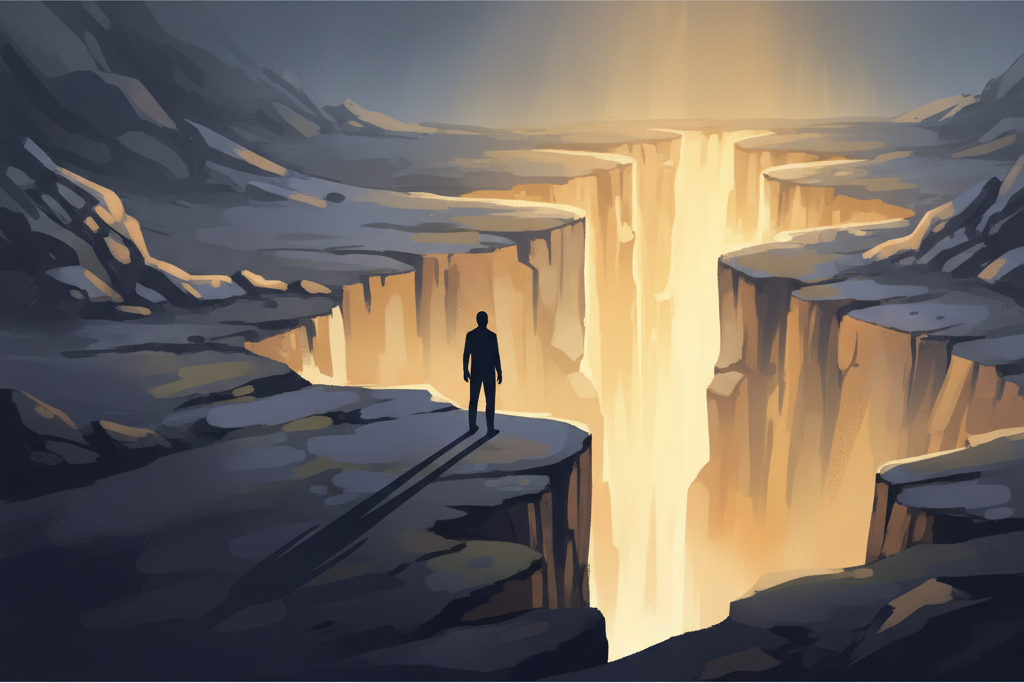
In 2026, one term has been repeated to the point of exhaustion in the tech world — yet its weight has never diminished: Superintelligence.
This is not some science fiction premise. The CEOs of OpenAI, Anthropic, and Google DeepMind all spoke publicly in 2026 about "superintelligence" as a concrete product goal — not "someday, maybe," but "this is where we are headed." TechCrunch cut straight to the chase in an early September report: superintelligence is coming — should we let it?
My immediate reaction upon seeing that question: this isn't a matter of "whether to let it come." It's a matter of "whether we can avoid being swept away when it does."
What Exactly Is "Superintelligence"?
In plain terms: a system that comprehensively surpasses human capability across every cognitive task. Not just beating you at chess or writing code faster than you — but outperforming the pinnacle of human achievement across scientific research, strategic judgment, creative generation, and social influence alike.
Think of it this way: today's GPT or Claude are "tools." You still control the input and review the output. The problem with superintelligence is that its reasoning capacity would be so far beyond ours that we would have no ability to verify whether what it says is correct — let alone steer the direction of its behavior.
This is not a distant prospect. OpenAI internally places AGI (Artificial General Intelligence) and ASI (Artificial Superintelligence) within the same decade-long window. Anthropic researchers have already written in resignation letters that "we are gambling with our lives" — this happened just days ago, it is not old news.
On the Technical Roadmap, "Self-Improvement" Is the Real Flashpoint
The core technical premise underlying current discussions of superintelligence is recursive self-improvement — an AI that can modify and optimize its own architecture, after which the more capable version continues to optimize further, accelerating in a loop.
This is fundamentally different from today's training paradigm. Current model updates are driven by human engineers. Once a model can autonomously advance its own capability frontier, humans become outsiders to the process.
The question is not "will it turn malicious?" — it is "whether its objective function aligns with human interests." This is precisely the alignment problem that AI safety researchers are scrambling to solve. And as of now, it remains unsolved.
Does this feel a little like pushing a car onto the highway before its brakes have been tested?
Why Are the Major Players Still Accelerating?
This is, to my mind, the part most deserving of honest examination. Not because they are unaware of the risks — but because slowing down means losing.
The competitive logic is brutal: if OpenAI pulls back out of safety concerns, the next lab will press on; if American companies decelerate, geopolitical pressure immediately fills the gap. Nvidia's move to acquire Hugging Face for tens of billions operates on the same logic — lock down the compute gateway, lock down the ecosystem. The capital logic driving the entire AI industry simply cannot afford to stop.
This is what makes this gamble so deeply unsettling: no single player has the ability to unilaterally call a halt, because stopping is itself losing.
So What Can We — Ordinary People — Actually Do?
Honestly, what individuals can do is limited. But it is not zero.
First: understand it. Superintelligence is not a topic that invites passive resignation — it is a civic issue that requires baseline literacy before you can form a judgment. Grasping the gap between AGI and ASI, understanding the nature of the alignment problem, knowing where the technology actually stands today — these are not assignments for engineers alone. They are the responsibility of everyone who will be affected.
Second: follow governance developments. In 2026, several major democratic governments are advancing AI regulatory frameworks, but progress is lagging far behind the technology. Your attention to these policies — and the pressure you apply — matters more than you might think.
Third: don't let fear drive you to close your eyes. This is enormous, complex, and frightening — but shutting your eyes and waiting for it to pass will not make you any safer.
Key Takeaways:
- Superintelligence is an explicit 2026 goal articulated by AI companies — not a distant hypothetical
- The true risk lies in "self-improvement" capability, not merely in "AI being very smart"
- The alignment problem remains unsolved, yet competitive industry logic prevents anyone from stopping
- This is a civic issue, not solely an engineering problem
There are no spectator seats in this game. Every AI tool any of us uses today, every contribution to training data, is another brick laid on this road. The question has never been "whether to let it come." The question is — do we have the standing to determine how it arrives.
References
Share
Related articles

The AI Application Boom Narrative Is Being Quietly Undermined by an Ugly Financial Model

The Day Turing Never Lived to See: AI Completes His Unfinished WWII Code-Breaking Mission

What Is RAG? A Complete Guide to Retrieval-Augmented Generation: How It Works, Use Cases, and Implementation Considerations

An Anthropic Researcher Quit Over Fear of AI Extinction—The People Building AI Are Walking Away Too