Someone Built a Tool That Makes Zoom Say 'Don't Record Me' — It's a Technical Hack and a Small Act of Defiance
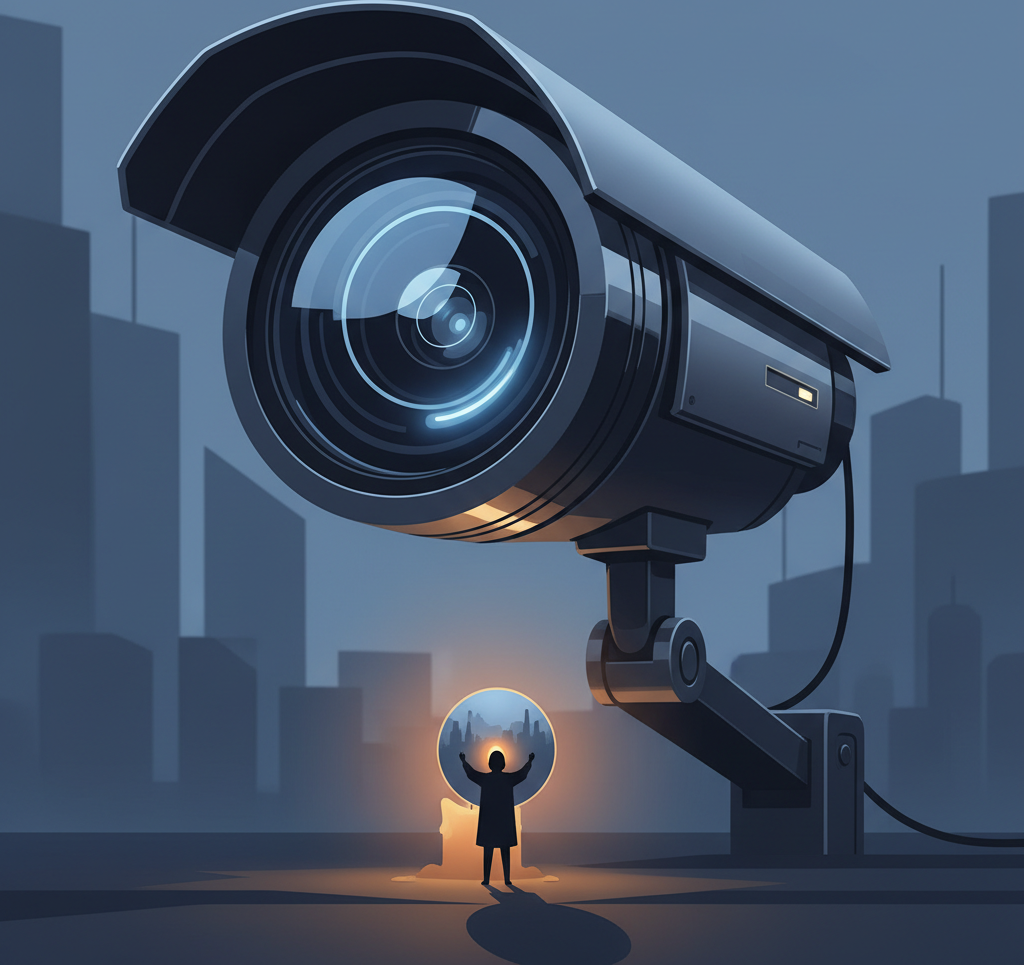
Scenario: When Was the Last Time You Were "Recorded"?
You probably can't remember. Maybe it was last week's team standup, maybe yesterday's client call, maybe some one-on-one you thought was casual. Zoom, Teams, Google Meet — these platforms have long been pushing "AI transcription + meeting summaries" as default features, and sometimes you don't even notice that little bot has quietly slipped into the room.
Then, just 48 hours ago, TechCrunch reported on a small tool that makes you want to applaud: a developer built a hack that lets your Zoom automatically signal a recording bot, with an effect roughly equivalent to "hey, I don't consent to being recorded." It's not a perfect legal shield, and it's not an enterprise-grade solution — but the mere fact that it exists already says quite a lot.
Why This Hack Arrived at Exactly the Right Moment
In plain terms: over the past two or three years, AI transcription tools have penetrated the market faster than anyone anticipated. Otter.ai, Fireflies, even Zoom's native AI Companion have made "record it, clean it up, send it to you" almost effortless. How effortless? Effortless enough that many people don't even remember switching the feature on, and one day they discover a transcript sitting somewhere, seen by who knows whom.
There's a structural problem here: these tools are designed with the logic of prioritizing "recording convenience" for the meeting organizer or enterprise IT — not for every individual sitting inside a video frame. You can mute your own microphone, but you can't turn off someone else's bot.
The emergence of this hack is, in a sense, saying: if the platform won't give me a formal "refuse to be recorded" button, I'll build one myself.
This Points to a Much Bigger Question
Have you ever considered that today's workplace culture is actually far closer to "total surveillance" than you might think?
Not that anyone is maliciously watching you. But when every meeting has an AI compiling a verbatim transcript, and every decision might be "archived for reference," people's behavior begins to self-censor without them even realizing it. Do you still dare to casually say in a meeting, "I think this direction is kind of dumb"? Do you still dare to speak your mind on a Google Meet call?
This phenomenon has a name: the chilling effect. It requires no legal mechanism, and no one actually has to go digging through your records — the mere possibility of being documented is enough to degrade the quality of conversation.
As a side note, the credibility issues inherent in AI-generated content add yet another layer of complexity here: is that AI-compiled "meeting summary" even accurate? Has anything been taken out of context? Was a joke you made interpreted by the model as a formal opinion?
"Technical Hack" vs. "Systemic Solution"
I have to be honest: what this tool can currently do is quite limited. It is more of a gesture — a way for an engineer to say in code, "I disagree with this default setting."
A genuine solution actually requires simultaneous action on several fronts:
- Platform level: Zoom and Teams should make it mandatory for every participant to see a clear, unambiguous notice that "this meeting is being AI-recorded," rather than burying it deep in the settings
- Regulatory level: GDPR in Europe already imposes relatively strict requirements on the handling of voice data, but Taiwan and most Asia-Pacific markets currently lack equivalent protections
- Organizational culture level: Has the company clearly told its employees how these recordings and transcripts will be used, how long they will be retained, and who has access?
You can think of this hack as a warning indicator light, pointing to a gap in the current system design — not a "technical gap," but a consent gap.
A Question for You, the Reader
Do the meeting tools you use right now have AI transcription switched on? If so, do your colleagues know? Did they consent?
This isn't meant to alarm you — it's just that many people have never once asked this question. If AI were truly designed with "serving the user" as its core principle, it's worth thinking carefully about whose convenience "convenient" actually refers to.
One Thought to Take With You
What matters about this hack that makes Zoom say "don't record me" isn't how many recordings it can block right now. What matters is the reminder it carries: default settings are themselves a position. When "recording" is on by default and "privacy" must be actively claimed, that design choice has already made a decision on your behalf.
The tools will keep evolving, and AI transcription will only get better — and harder to detect. But throughout this process, each of us can start by asking the question: "Am I being recorded right now?" — and then decide whether or not we consent.
References
Share
Related articles

Is the ChatGPT Model You're Using Right Now Actually the Best One for You?

Claude vs ChatGPT: Choose Based on Your Use Case, Not Feature Tables
Claude Skills Complete Guide: How to Build, How to Use, and the Mistakes Most People Make
Claude 3.5 Sonnet vs. Opus vs. Haiku: The Most Complete Model Comparison for 2026