Tokenpocalypse Is Coming? The Price Hike Logic and Era Anxiety Behind the AI Giants' IPO Wave
A New Word, A Signal of an Era
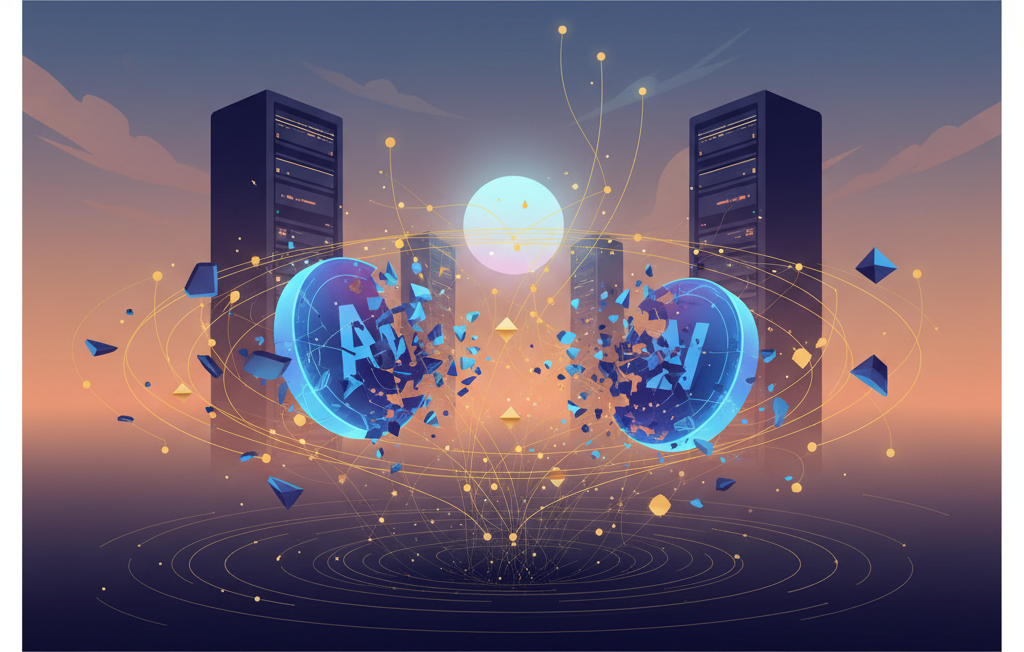
Over the past 48 hours, a newly coined term has been circulating in tech circles: Tokenpocalypse. The word fuses "Token" (the basic billing unit of AI computation) with "Apocalypse," and while it sounds sensational, the logic behind it is remarkably clear-headed — as major AI players like OpenAI, Anthropic, and xAI successively signal IPO plans or large-scale fundraising moves, the market has begun seriously asking one question: When will these companies pass the pressure of capital markets on to users' bills?
The answer is likely already on its way.
Burning Cash for Market Share — This Road Is Nearing Its End
Over the past three years, AI giants have shared a common pricing logic: acquire market share at prices below cost. When OpenAI launched GPT-4 Turbo in 2023, it charged just $10 per million input tokens. By mid-2024, GPT-4o had dropped to $5 — on the surface, an efficiency dividend from technological progress, but at a deeper level, the motivation was clear: lock in the developer ecosystem with low prices, then adjust once the competitive landscape is established.
This logic is sustainable while a company remains private, because losses are absorbed by venture capital. But once a company moves toward public markets, the shareholder structure changes entirely, quarterly earnings become a matter of survival, and "burn cash for growth" is no longer an unlimited pass.
According to reporting by The Information, OpenAI's annualized revenue in 2024 reached approximately $3.4 billion, yet the estimated compute costs for the same period — including Microsoft Azure infrastructure — still represent a massive deficit. Anthropic's situation is similar: despite Amazon injecting over $4 billion, analysts still consider the API pricing for the Claude 3 series to be insufficient to fully cover costs.
When the IPO bell rings, all of these numbers will need to be repriced.
Three Paths to Token Price Hikes
In my observation, AI giants are unlikely to simply announce "we're raising prices" when it comes to passing on costs. Instead, they will likely take three more subtle paths:
1. Free Tier Reduction The free version of GPT-4o began showing usage restrictions in the second half of 2024, and Gemini Advanced transitioned from a trial to a subscription model. This is the classic slow-boil approach — you're not raising prices, you're simply "adjusting service tiers."
2. Repricing Enterprise Plans The B2B market is the core cash flow source for AI giants. It's foreseeable that enterprise API contracts, upon renewal, will see new line items appear — "performance optimization fees," "priority queue fees" — which are essentially a transfer of inflation to the enterprise level, which then passes it on to end consumers.
3. Launching Premium Models to Make Old Versions "Relatively Cheap" This is exactly the path OpenAI's o1 and o3 series have taken — by releasing flagship models that are noticeably more expensive, GPT-4o is made to feel "cheap" psychologically, while the overall market price floor is quietly raised. This is a very sophisticated anchoring effect maneuver.
Is This a Bubble Bursting, or an Inevitable Cost?
Some interpret Tokenpocalypse as a bubble signal — when an industry shifts from "burn money to expand" to "extract profit," it often signals that the growth narrative has peaked and investors are beginning to demand returns. This logic has merit.
But I lean toward a different reading: this is the inevitable growing pain of industry maturation, not the eve of a bubble burst.
The reference point is cloud computing. AWS, Azure, and GCP also used extremely low prices to grab market share in their early days. Once the ecosystem was locked in and enterprise dependency was established, pricing gradually normalized. No one today calls cloud computing a bubble, but the low prices of the early 2010s were genuinely a "subsidy period" — not a permanent state.
The token pricing cycle in AI may be shorter than cloud computing, because competition is fiercer, technology iterates faster, and capital market patience is thinner. This means the pressure to raise prices will concentrate and explode within a much shorter time window.
What Does This Mean for Users and Developers?
If you are an individual user: now is the best time to build your usage habits and evaluate which platforms are truly irreplaceable. Subscription plan prices have a significant probability of being raised within the next 12–18 months — take the time now to clarify your core needs.
If you are a developer building products on AI APIs: the assumptions in your cost structure need to be stress-tested again. Many startups have built their business plans around token costs based on the subsidized pricing of 2023–2024 — figures that may substantially underestimate actual expenditures post-2026.
If you are an investor: the other side of Tokenpocalypse is opportunity — application-layer companies that can remain competitive even in a high token-cost environment are the true holders of durable moats.
One Final Question
Tokenpocalypse is a word that carries a sense of doom, but every "apocalypse" in history has ultimately been a kind of restructuring. The real question is not "will AI raise its prices" — it will, without a doubt. The question is: when the subsidy period ends, which use cases offer enough value to keep users willingly paying?
The companies that can answer that question are the true winners of this restructuring.
Share
Related articles

Is the ChatGPT Model You're Using Right Now Actually the Best One for You?

Claude vs ChatGPT: Choose Based on Your Use Case, Not Feature Tables

Claude Skills Complete Guide: How to Build, How to Use, and the Mistakes Most People Make
Claude 3.5 Sonnet vs. Opus vs. Haiku: The Most Complete Model Comparison for 2026