Sam Altman Says He Wants to 'Slow Down'—You May Be Underestimating What That Means
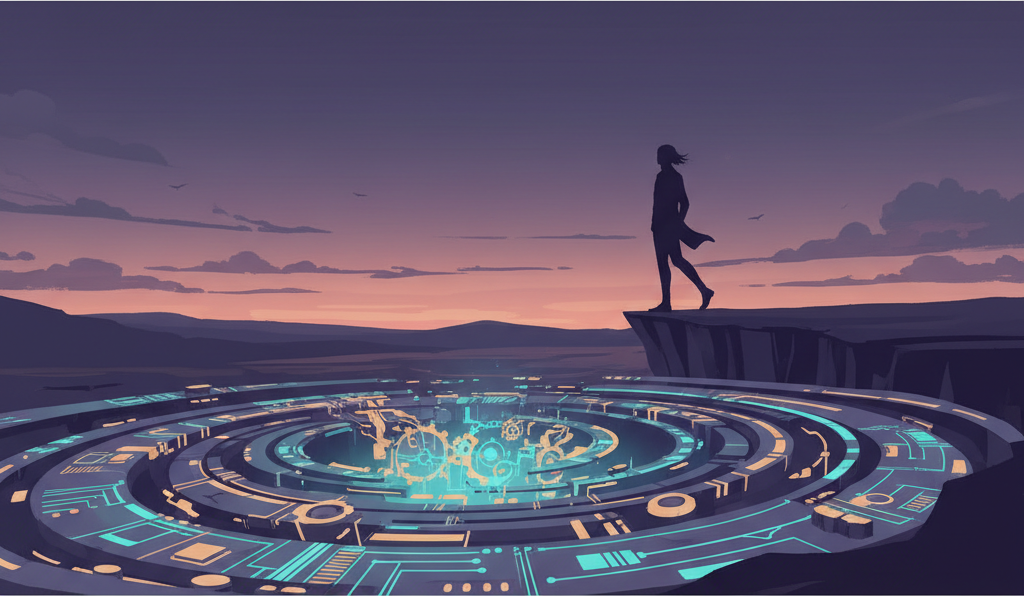
Some words carry completely different weight depending on who says them.
"We should slow down AI" — coming from a regulator, you treat it as background noise; coming from an academic researcher, you might nod in agreement and keep scrolling Twitter; but coming from Sam Altman? That's a different matter entirely.
According to a late-July TechCrunch report, Altman recently made a public about-face, stating that he is ready to "decelerate." And the reason he gave wasn't regulatory pressure or competitive dynamics — it was, in his own words: "the first safety incident that has genuinely unsettled me."
This is the first time the OpenAI founder has ever spoken in quite this tone.
From "Full Speed Ahead" to "Wait a Moment" — What Happened
Altman's public persona over the past few years has essentially been that of the face of AI accelerationism. GPT-4, GPT-4o, o1, o3, GPT-5 — each version shipped on an ever-tighter timeline, and OpenAI's pace left the entire industry gasping to keep up. You could sum up his logic as: race to the finish line first, then circle back to handle whatever problems cropped up along the way.
But the phrase "the first safety incident that has genuinely unsettled me" means he has now seen what happened along the way.
He didn't specify which incident. That deliberate vagueness is itself worth noting — if it were some trivial nuisance, he wouldn't have brought it up; if it were a technical problem suitable for public disclosure, he wouldn't have needed to be this oblique. The silence leaves considerable room for outside speculation: Was it model behavior exceeding expectations? Some undisclosed alignment failure? Or an internal system decision he found himself unable to control?
I recently wrote about the OpenAI data breach on Hugging Face, and the central argument of that piece was this: what was exposed wasn't merely a token management vulnerability, but the industry's deep-seated anxiety about model controllability. It's hard to look at Altman's current statement without connecting it to that incident.
What "Deceleration" Means for OpenAI's Product Cadence
Let's be a bit pragmatic here. Altman saying he is "ready to decelerate" does not mean OpenAI will stop releasing new models, nor does it mean projects already in motion will be called off. Put plainly: he is adjusting his rhetorical framing, not necessarily his execution pace.
But a shift in framing still carries meaning.
Once Altman publicly acknowledges "a safety incident that unsettled him," OpenAI's internal safety teams gain an additional point of leverage in internal discourse. The quiet exodus of OpenAI safety researchers over the past few years has been something of an open secret — Ilya Sutskever's departure, the dissolution of the superalignment team — these events have left their mark on the community. If Altman is now genuinely saying "I hear you," that is, in some measure, a signal to those who stayed.
Another dimension worth tracking is the competitive landscape. Anthropic and Google DeepMind have long used "a more cautious safety posture" as a differentiating label. Will OpenAI's course correction erode part of that label's persuasive power? Or, conversely, will it pull the entire industry's safety standards upward? There are no answers yet, but the product release cadence over the next six to twelve months will provide clues.
The Accelerationist Narrative Is Being Questioned by Its Own
You probably have friends debating whether AI accelerationism (e/acc) or AI safety is right. That debate has been raging on Twitter for years, with smart people on both sides — and plenty of noise on both sides too.
But one thing has always been clear: whatever Sam Altman said publicly, his actions consistently placed him closer to the accelerationist camp. So when he says he is "ready to decelerate," this is not a neutral observer commenting on the situation — it is a part of the situation itself changing.
That is precisely why these words deserve to be taken seriously, rather than dismissed as PR talking points and quickly moved past.
If you've been looking at how different AI models actually differ in real-world use cases, you'll notice that Anthropic's Claude has consistently embodied a more explicit design philosophy around "safety frameworks" — Constitutional AI, long-term alignment research, a more conservative release strategy. This isn't to say Claude is necessarily more useful than GPT-5, but rather that different organizational cultures ultimately manifest in a product's boundary conditions. Altman's statement is, in some sense, an acknowledgment that OpenAI's organizational culture needs to shift in that direction.
The Takeaway
The debate over AI's pace has never been purely a technical question — it has always also been a political question about who gets to decide how fast things move.
When Altman says he wants to slow down, the most important signal isn't the speed itself. It's that he has admitted something: certain things happened that left him unsettled. In an industry that habitually wraps every technological risk in optimism, that kind of admission is, in itself, rare.
As for how much of it he actually follows through on — that remains to be seen in the actions that follow. Words come easy; model release timelines don't lie.
References
Share
Related articles

Is the ChatGPT Model You're Using Right Now Actually the Best One for You?

Claude vs ChatGPT: Choose Based on Your Use Case, Not Feature Tables

Claude Skills Complete Guide: How to Build, How to Use, and the Mistakes Most People Make
Claude 3.5 Sonnet vs. Opus vs. Haiku: The Most Complete Model Comparison for 2026