Nolan Called It a 'Trojan Horse'—Everyone Knows What's Hidden Inside
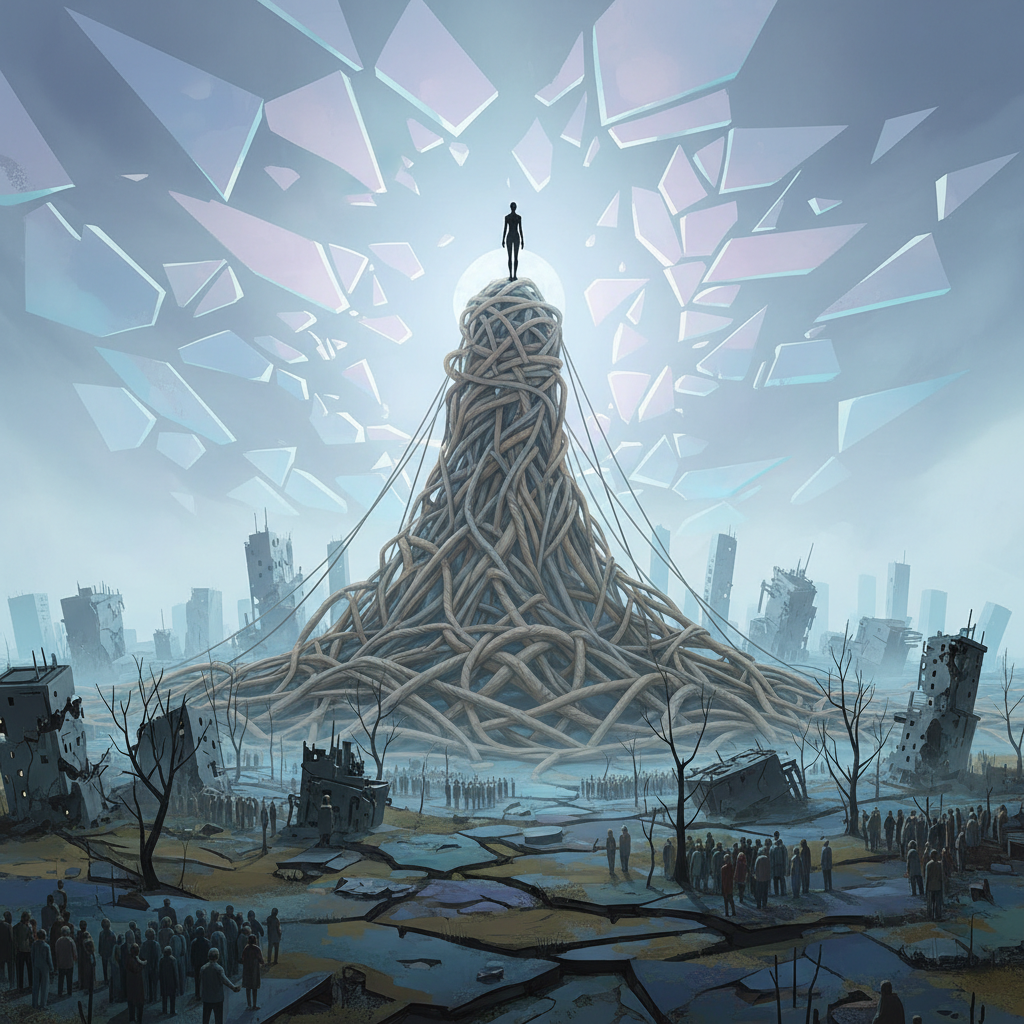
Last Sunday, while the promotional campaign for Odyssey was still underway, Christopher Nolan abruptly shifted his tone mid-interview and delivered a line that left both the tech world and the film industry momentarily speechless.
He called AI an "obvious Trojan horse," then added: "Everybody knows the Greeks are inside."
According to TechCrunch's report, published on July 19, 2026 — less than 48 hours ago — the quote has already swept through my Twitter timeline three times over.
The Horse Was Never a Secret, Yet the Gates Opened Anyway
What makes Nolan's line so sharp isn't that it reveals something — it's that it names what everyone already knows.
The real irony of the Trojan Horse story isn't how clever the Greeks were. It's that the Trojans had people warning them, and they wheeled the horse inside anyway. Cassandra spoke. Laocoön spoke. No one listened. Nolan is now stepping into the role of Cassandra — but that added line, "everybody knows," hits even harder, because he's saying: this time, we can't even pretend not to know.
Think of it this way: the current state of Hollywood, publishing, and the music industry isn't one of being "ambushed by AI." It's one of voluntarily opening the gates, then negotiating the terms of coexistence. Studios are signing AI usage agreements. Streaming platforms are testing AI-driven localization and dubbing. Visual effects companies are running AI pipelines at the same time they're laying off workers. The horse has been inside the city for a while now.
Nolan's Timing Is Deliberate
Odyssey itself is a fascinating choice of subject matter — Homer's epic, one of humanity's oldest narratives. Doesn't it strike you as intentional that a director who chose this material would drop the phrase "Trojan horse" at precisely this moment? There's a studied symmetry to it.
Over the past few years, Nolan has been one of the harder-line voices in Hollywood's AI negotiations. He is one of the few major directors who publicly supported the SAG-AFTRA and WGA strikes and treated the digital replication of actors' likenesses as a central issue. He is not technologically naive — he worked with Kip Thorne on real black hole physics for Interstellar. He knows what a tool is. What he's saying is not "AI shouldn't be used." He's saying: "The way AI infiltrates makes refusal impossible, and everyone knows the cost, and everyone accepts it anyway."
That logic sits on the same continuum as [the extreme scenarios in AI alignment discussions](你每天用 AI 問問題,但你知道它有多常在說謊嗎?) — when a system becomes powerful enough that refusing to use it amounts to unilateral disarmament, how much does "voluntary choice" actually mean?
Where That Horse Is Standing Now
In plain terms: AI has never infiltrated the culture industries through force. It has done so by offering efficiency you cannot afford to refuse.
An independent animation studio that uses AI for storyboarding can cut 30% of its pre-production costs. A mid-sized publisher that uses AI for draft polishing frees its editors to focus on higher-value work. These are not hypotheticals — they are happening. The problem is structural: once the entire industry operates this way, creators who don't use AI become cost-uncompetitive. The market selects for adoption without anyone issuing a mandate.
That's what Nolan means by "obvious" — the mechanism is not hidden, the outcome is predictable, and none of that prevents it from unfolding exactly as expected.
The contrast with the software industry is instructive. The Hugging Face CEO has already said companies no longer want to rent AI — they want to own their models and control their own pipelines. The tech world is having the conversation about how to reclaim control from the horse. The culture industries are still debating whether to let the horse in. That gap in timing says something important on its own.
That Sinking Feeling — Do You Know It?
Let me ask you something: the last time you watched a film, read an article, or listened to a song, did the thought flash through your mind — was this made by AI?
If it did, your instincts are keeping pace. If it didn't, it may be because you've stopped caring — and that indifference, in itself, is one of the signals that the horse is already inside.
The reason Nolan's line spread so fast isn't that he said something new. It's that he turned a vague, ambient unease into a complete sentence. Most people's first reaction wasn't "huh, I'd never thought of that" — it was "yes, that's exactly the feeling."
Content that articulates a fear people have already been carrying, but couldn't quite name, is consistently among the most shareable there is.
One Thought to Take With You
There's one dimension of Nolan's Trojan Horse metaphor I think is worth sitting with: the Greeks inside the horse ultimately burned the city down.
But our situation may be more complicated than that — because the people inside the city are helping carry the firewood, on the grounds that it's more efficient.
This isn't pessimism. It's the current reality you need to understand. What comes next looks different for every person and every industry. But at the very least, hold onto that line — everybody knows the Greeks are inside — because walking in with clear eyes is still meaningfully different from being led in without knowing it.
References
Share
Related articles

Is the ChatGPT Model You're Using Right Now Actually the Best One for You?
Claude vs ChatGPT: Choose Based on Your Use Case, Not Feature Tables
Claude Skills Complete Guide: How to Build, How to Use, and the Mistakes Most People Make
Claude 3.5 Sonnet vs. Opus vs. Haiku: The Most Complete Model Comparison for 2026