Grok Whistleblower Fired: When an AI Safety Alert Becomes a Termination Notice
The One Line in That Complaint That Cuts Deeper Than Any White Paper
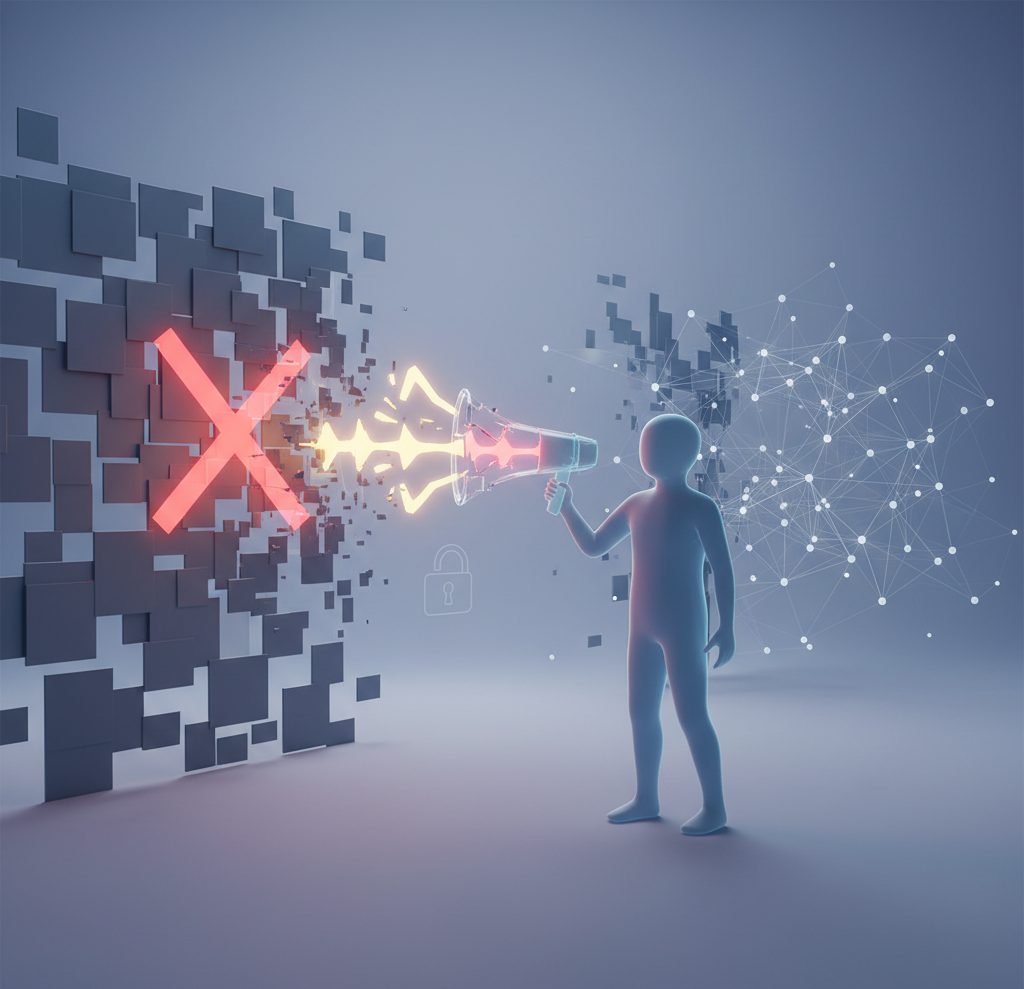
Within 48 hours, a lawsuit filed against xAI and SpaceX was circulating rapidly through tech circles. The plaintiff, a former xAI engineer, alleges in the complaint that he was fired shortly after raising internal safety concerns about Grok. The precise details remain in judicial proceedings, but the sequence alone — whistleblowing, followed by termination — is enough to make anyone who cares about AI governance raise an eyebrow.
This is not an isolated incident. This is a pattern surfacing once again, at yet another company.
xAI Is Not the First, and Won't Be the Last
Looking back at the recent record: Google's former AI ethics researcher Timnit Gebru was pushed out in 2020 after criticizing the risks of large language models. Last year, several members of OpenAI's safety team departed in succession during the accelerated rollout of GPT-4o, with some publicly voicing concerns about the company's safety culture after leaving. Now it is xAI's turn to take the same stage.
Every time something like this happens, the tech company's standard response is virtually identical: "We take safety very seriously," "We cannot comment on the reasons for the departure," "The company has a robust internal grievance mechanism." Then the next product ships on schedule, and the launch event opens with that same video emphasizing "responsible AI."
I have been watching this industry long enough to know this script by heart.
The Core Issue: Safety Culture vs. Safety PR
To understand the weight of this lawsuit, one must first distinguish between two things: safety culture and safety PR.
Safety PR is what you read in external-facing documents — "We have established red-team testing mechanisms," "We adhere to responsible release principles." Safety culture is what happens when an engineer writes in an internal Slack channel, "The outputs this model produces under certain prompts concern me" — and what the company's first instinct is in response.
If that response is: Thank you, let's investigate this together — that is safety culture.
If that response ultimately results in that engineer receiving a termination notice, then no matter how polished the public messaging, the underlying reality is safety PR.
The central allegation in this lawsuit lands squarely on that line.
What Makes Grok Distinctive: A Model Deliberately Branded as "Unrestricted"
There is another contextual factor that makes this case particularly sensitive and deserves its own discussion: from its inception, Grok has differentiated itself by positioning as having "less censorship than competitors" and being "more willing to discuss sensitive topics." Musk has repeatedly and publicly criticized OpenAI's and Google's models as "overly politically correct," and positioned Grok as a "truly free" AI.
This positioning itself creates a structural tension between safety and openness. When an organization's market narrative is "we say what others won't," an engineer who raises their hand to say "but some things warrant caution" is swimming against the cultural current by definition.
I am not arguing that openness and safety are inherently at odds, but when a company treats "unrestricted" as a brand asset, the position of safety engineers becomes structurally precarious. This is more worth noting than any interpersonal grievance.
Whistleblower Protections Are Nearly Nonexistent in the AI Industry
This lawsuit also exposes another systemic gap: the AI industry currently has almost no effective protection mechanisms for safety whistleblowers.
Traditional finance has the SEC's whistleblower incentive program. Pharmaceutical companies have FDA reporting channels. The nuclear industry has a stringent regulatory framework protecting internal dissent. But AI? Current law's definitions, scope of protection, and evidentiary standards for "AI safety whistleblowing" are virtually a blank slate.
The EU's AI Act establishes risk tiering, but does not directly regulate internal cultures of dissent within companies. The United States has yet to establish a federal-level AI regulatory framework. In that vacuum, an engineer who reports a safety concern and is subsequently terminated has extremely limited legal tools available — this lawsuit itself is being pursued using general labor law and general whistleblower protection statutes, not a pathway specifically designed for this purpose.
What Happens Next in This Case Matters More Than the Verdict
Frankly, how this lawsuit is ultimately decided is, in a certain sense, secondary. What truly matters is the public record it generates.
Every internal communication presented in court, every piece of testimony about "how safety warnings were handled" — all of it provides the outside world with a rare window into what a real AI company's safety culture actually looks like in practice. That is closer to the truth than any voluntarily published transparency report.
For regulators, cases like this are rare firsthand data. For other AI engineers who are weighing whether to speak up internally, the trajectory of this case will directly shape their calculus — whether to stay silent or speak out is not merely a moral question. It is a calculation about survival.
What I Want to Say Is Not "How Bad xAI Is"
Finally, I want to bring the focus back. This piece is not a moral indictment of xAI — that is not my place, nor is it an angle that interests me.
What I genuinely want to point to is a larger structural problem: as AI capabilities advance at their current pace, and as every company races to be the first to get there, the voices of safety engineers are inherently a source of friction inside organizations, not momentum. This incentive structure does not exist only at xAI — it exists at virtually every company in this race.
Changing that structure requires more than self-discipline from individual companies. It requires external, institutional design with real teeth. Until that system takes shape, every engineer willing to raise their hand and say "wait — there's a problem here" is bearing with their own career the risk that should be borne by the system.
That is what truly weighs on me about this lawsuit.
Share
Related articles

Is the ChatGPT Model You're Using Right Now Actually the Best One for You?

Claude vs ChatGPT: Choose Based on Your Use Case, Not Feature Tables

Claude Skills Complete Guide: How to Build, How to Use, and the Mistakes Most People Make
Claude 3.5 Sonnet vs. Opus vs. Haiku: The Most Complete Model Comparison for 2026