Live for a Day, Then Pulled: The Google Earth AI Feature Fiasco Reveals What the Industry Won't Admit
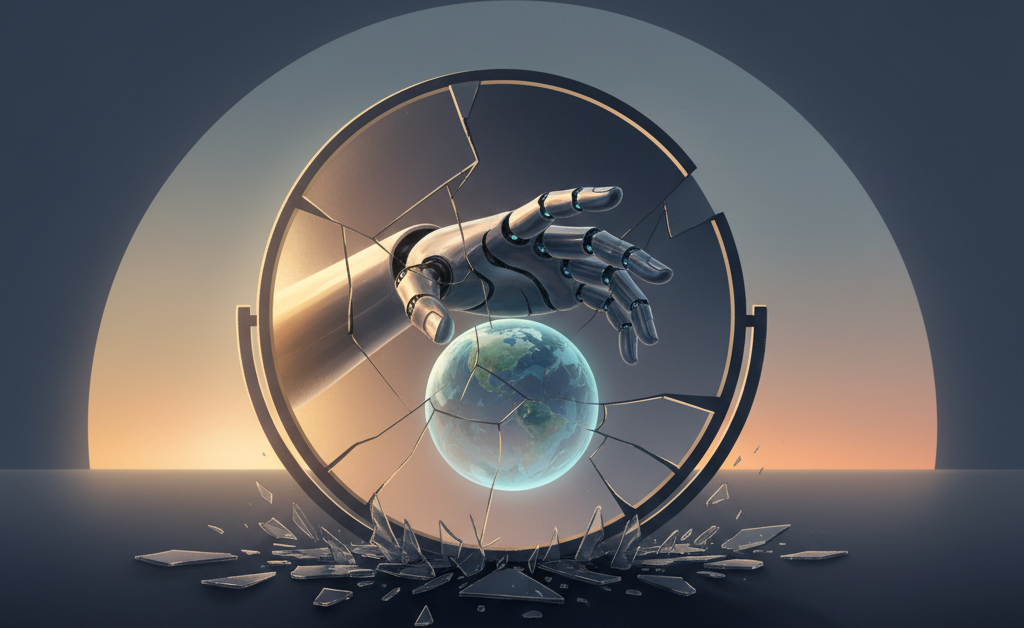
The Next Morning, You Open the News and the Feature Is Gone
Have you ever had this feeling: you saw a demo of some AI feature on Twitter yesterday and thought "wow, that's pretty cool," and then the next day you go looking for it and even the entry point is gone?
In late July 2026, Google launched a new feature on Google Earth that let users generate AI images and overlay them onto real satellite map footage. In plain terms: you could composite something that doesn't exist — say, a fake building or a nonexistent road — into a real map, then screenshot it and share it.
The feature was live for less than 24 hours before Google pulled it. The reason? A wave of criticism flooded in, arguing that the tool would become a breeding ground for false geographic information — fabricating disaster scenes, inventing military installations, manufacturing fake "satellite photos" — all with virtually zero barrier to entry.
Why "Maps" Are Especially Dangerous Material
A lot of people have developed a certain immunity to AI-generated images. Spot a face that looks a little off, count the wrong number of fingers, and you know it's AI. But maps are different.
Maps carry an implicit "aura of objectivity" in how we perceive them — they represent places that actually exist, and satellite imagery even more so. When you look at a satellite photo, your instinctive reaction is "this was captured," not "this was drawn." Embedding AI-generated content directly into that framework is essentially lending it credibility — loaning trustworthiness to misinformation.
What makes it worse is that the feature was designed so that anyone could operate it: no Photoshop skills required, no background in image editing whatsoever. That kind of "lowered barrier" is a good thing in many contexts, but in a context where you can manufacture false geographic evidence, it basically amounts to accelerating the spread of misinformation.
I find myself wondering: if the feature had stayed up for two more weeks, where would the first wave of misuse screenshots have appeared? The answer is probably "on-the-ground footage" from conflict zones, "latest construction photos" of some city, or "satellite comparison images" from a recent natural disaster — all topics that audiences have virtually no way to independently verify.
This Isn't the First Time for Google, and It Won't Be the Last
Honestly, if this had happened at an AI startup three years old, I might have just shrugged — small company, limited resources, incomplete review processes, totally understandable.
But this is Google. A company worth over two trillion dollars, with an entire policy and trust-and-safety department.
The question isn't "did they not know this feature could be abused?" The question is "they knew, and they launched it anyway." Somewhere in a product meeting, someone must have assessed this risk and decided: ship it first, see how people respond.
That's what I mean by "ship it and see" culture. The whole AI industry operates on this rhythm; Google just made it unusually visible this time around. If you've been following AI news lately, you may have noticed Sam Altman's statement about "slowing down" — that was a rare public acknowledgment that even the industry's leading figures recognize this pace is problematic.
Interestingly, the Google Earth incident is structurally very similar to OpenAI's security incident: neither was a failure of the technology itself, but rather a failure in "the decision-making process for releasing the technology." That analysis of what lay behind the OpenAI leak made a point I think is spot on — the real crack isn't in the system, it's in the governance.
You Can Think of This as a Stress Test
There's an optimistic reading of events: the takedown itself shows that external oversight is still functioning — users, media, and researchers applied pressure together, and Google responded within a single day.
That's not meaningless. Compared to "quietly let the feature keep running for months while the harm slowly accumulates," a rapid takedown at least demonstrates that some accountability mechanism still exists.
But if we set the standard as "fast enough takedown counts as responsible behavior," then the entire process becomes: throw something into the market first, use real users as a stress test, and only stop when enough people cry foul — that logic has already left behind plenty of lessons when applied to social media algorithms, and there's no reason to be more optimistic about AI features.
The real question is: is there a way to run this stress test before launch?
The One Thought to Take Away
This whole situation brings to mind a very old engineering mantra: "move fast and break things." That phrase sounded like progress in 2012. In 2026, when the "things" being broken might be geopolitical information, electoral perception, or disaster response, it doesn't sound quite so cool.
Every time one of these "launched and pulled within a day" stories comes along, the easiest reaction is to roll your eyes and scroll past. But I think the more worthwhile question to ask is: how many similar features are still live right now, simply because not enough people have noticed them yet?
Next time a friend sends you a "satellite image" as the "latest on-the-ground view" of some place, take a second to pause and think.
If you want a more systematic look at how different AI tools approach safety boundary design, that comparison piece on Claude, GPT, and Gemini breaks it down in more detail — after reading it you'll probably have a better sense of why different tools have different limitations.
Key Takeaways
- Google Earth's AI image overlay feature was pulled in under 24 hours over misinformation concerns
- Maps and satellite imagery carry a special cognitive credibility, making AI-generated content overlaid on them even higher risk
- The core problem isn't a technology failure — it's a product culture of "ship first and ask questions later"
- A fast takedown doesn't equal responsible behavior — the real issue is the review standard applied before launch
- This is a systemic tendency across the entire AI industry, not an isolated Google incident
References
Share
Related articles

Is the ChatGPT Model You're Using Right Now Actually the Best One for You?
Claude vs ChatGPT: Choose Based on Your Use Case, Not Feature Tables

Claude Skills Complete Guide: How to Build, How to Use, and the Mistakes Most People Make
Claude 3.5 Sonnet vs. Opus vs. Haiku: The Most Complete Model Comparison for 2026