ChatGPT Images 2.0: This Time It's Not Just 'Better Looking' — It Rewrites the Underlying Logic of Image Generation
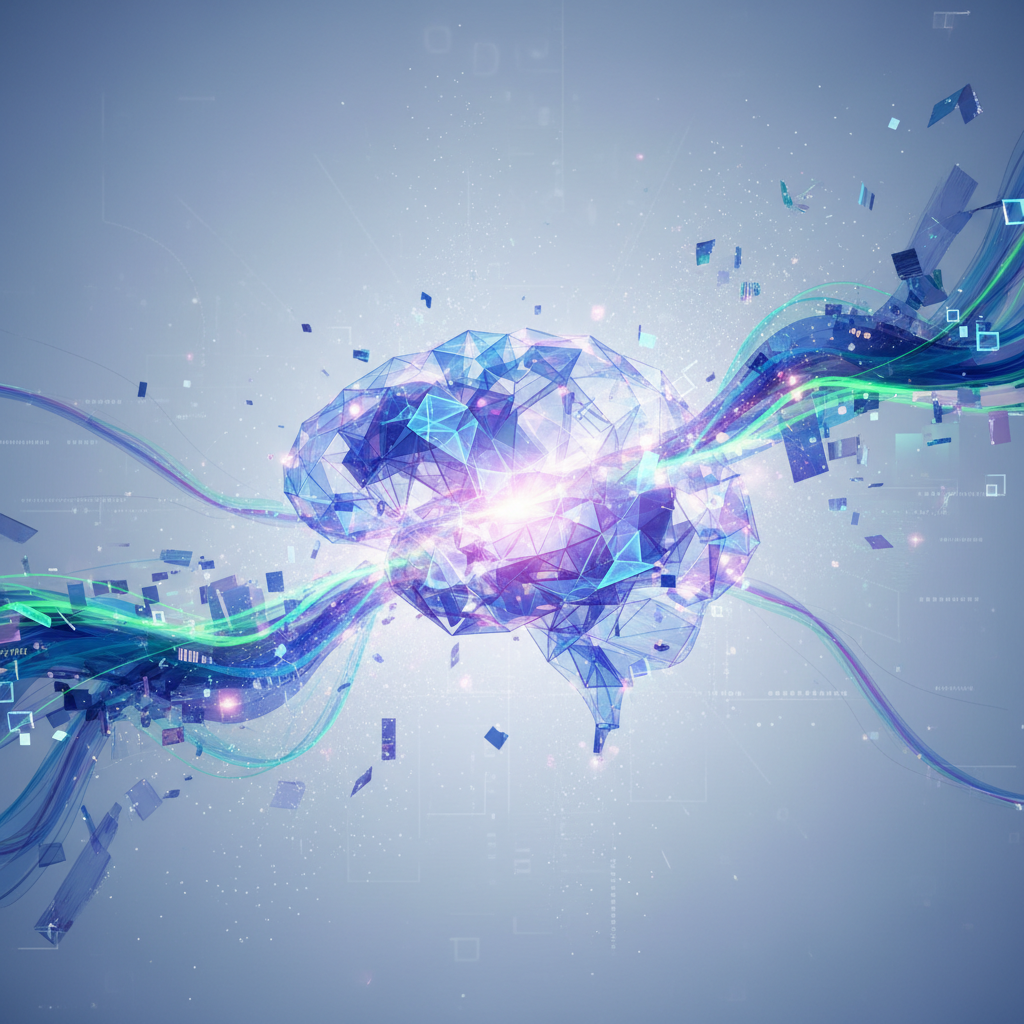
Let's Get One Thing Straight First: This Is Not an 'Iteration'
Every few months, an AI image generation tool rolls out a new version number, paired with a set of polished sample images, triggering another round of social media buzz. Most of the time, the so-called "upgrade" amounts to slightly finer aesthetics and higher resolution — the underlying logic hasn't fundamentally changed.
ChatGPT Images 2.0 doesn't belong in that category.
What OpenAI has delivered this time is a genuine architectural overhaul — not making the model "draw better," but making it "truly understand what you're saying and then translate that into visuals." These two things may sound similar, but they are separated by an order of magnitude.
The Technical Core: A Leap in Semantic Binding Capability
Previous text-to-image systems were, at their core, a "keyword mapping" mechanism. You input "an orange cat sitting by a café window, afternoon light, bokeh effect," and the model would parse the vectors of those terms, then retrieve the closest visual combination from its training data. It understood words — not the logical structure of sentences.
This is why earlier image generation systems would suffer "selective amnesia" when handling complex instructions. Tell it "a red cup on the left, a blue book on the right," and the output would often get the colors right but the positions wrong — or merge the two objects into one. The model was never truly parsing spatial relationships or object attribution.
Images 2.0 introduces a deeper multimodal semantic alignment architecture. Specifically, it strengthens the following dimensions:
- Spatial relationship understanding: Instructions such as "A is to the left of B" or "foreground is X, background is Y" are now executed with significantly greater precision
- Text rendering capability: This has long been a critical weakness of image generation models. Images 2.0 has reached a commercially viable threshold for accurately embedding readable text within generated images
- Style consistency retention: When editing images across a continuous conversation, elements not specified for modification are preserved far more reliably
- Negative instruction compliance: Exclusionary prompts such as "no text at all" or "no people in the background" are now followed with notably higher consistency
Why 'Text Rendering' Is the Most Important Breakthrough This Time
I want to pause here specifically, because it matters more than most people realize.
For a long time, placing readable text inside AI-generated images was the bane of designers everywhere. Letters on signage would warp and distort, Chinese characters on posters were nearly illegible, and this flaw severely limited the practical application of AI image generation in real commercial contexts — if the brand name on your beautifully generated product image is garbled nonsense, it simply cannot be used.
Images 2.0's improvement on this front means it is now genuinely entering the range of high-frequency commercial use cases: advertising materials, social media post templates, presentation visuals, and more. This is not a minor feature refinement — it is an expansion of the boundaries of applicable scenarios.
The Gray Zone of Creative Rights Just Got Grayer
Advances in technical capability always amplify ethical concerns, and Images 2.0 is no exception.
As image generation systems execute complex instructions with greater precision, the boundary problem around "style imitation" becomes sharper. In the past, prompting for "a Miyazaki-style forest scene" typically yielded a relatively vague approximation. Now, the system can more accurately reproduce a specific artist's brushstroke characteristics, color philosophy, and compositional habits.
This raises a question that still has no legal resolution: Does style itself constitute a protectable subject matter under copyright law?
Copyright law in most jurisdictions protects "specific expression" rather than "style," which means AI can technically and legally imitate a particular creator's visual language to a high degree without constituting direct reproduction. But the gap between "technically legal" and "ethically reasonable" is widening continuously as generative capabilities improve.
OpenAI's approach to this issue has been to introduce partial artist protection mechanisms at the system level — applying keyword filters to the names of certain living creators. However, the coverage and enforcement consistency of this mechanism remain deeply contested.
The Real Impact on the Design Industry
I've observed an interesting divide: within design communities, reactions to Images 2.0 generally split into two camps.
One is "this is finally usable" — particularly among content creators, social media managers, and small-to-medium business marketers who previously lacked access to high-quality visuals due to budget or technical barriers. They now have a genuinely workable tool.
The other is "this has changed the definition of my work" — senior designers are no longer grappling with existential anxiety about being replaced. Instead, they face a more concrete structural question: when clients can generate "80-point visuals" on their own, a designer's irreplaceability must be re-anchored in that remaining 20 points. And those 20 points — strategic thinking, brand consistency management, communicating with stakeholders — are things Images 2.0 cannot come close to touching.
The Next Stop on This Technical Roadmap
From the capability profile of Images 2.0, OpenAI's technical roadmap in the multimodal direction can be read fairly clearly: to make the language model a true "translator" of visuals, not merely a "trigger" for them.
The endpoint of this direction is a system capable of dynamically understanding visual needs throughout a conversation, making real-time adjustments, and integrating seamlessly with other tool chains — such as video generation, 3D rendering, and UI design tools. What we see in Images 2.0 today is very likely just a waypoint along that road.
What's worth tracking continuously is not how stunning the image quality of the next update will be, but how much further the depth of semantic understanding can be pushed — and how, before that endpoint arrives, creators can redefine their own position within this production chain.
Share
Related articles
Is the ChatGPT Model You're Using Right Now Actually the Best One for You?
Claude vs ChatGPT: Choose Based on Your Use Case, Not Feature Tables
Claude Skills Complete Guide: How to Build, How to Use, and the Mistakes Most People Make
Claude 3.5 Sonnet vs. Opus vs. Haiku: The Most Complete Model Comparison for 2026