Slow and Steady: Apple's AI Strategy Is Far More Calculated Than You Think
Background: Apple's AI Counteroffensive Has Officially Begun
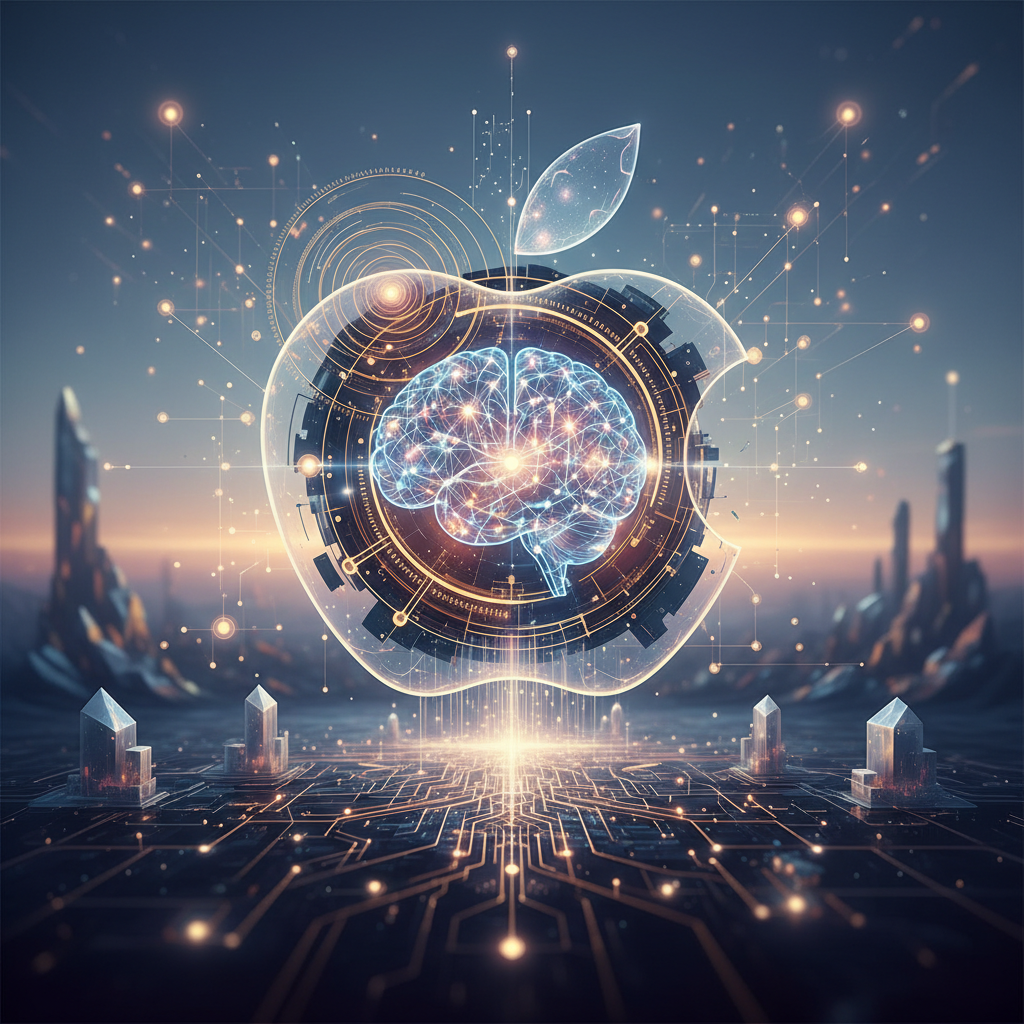
Over the past 48 hours, the ripple effects of Apple's WWDC announcements have continued to unfold — a complete rebuild of Siri, the cross-device rollout of Apple Intelligence, and deepening details of its partnership with OpenAI have forced the tech media to seriously revisit one question: Is Apple, long mocked for being "half a step behind on AI," actually falling behind — or is it playing an entirely bigger game?
I've been observing the AI industry for some time now, and this question deserves a serious breakdown.
The Logic — and Blind Spots — of the "Falling Behind" Narrative
Let's start by acknowledging that the critics aren't entirely wrong.
Over the past two years, OpenAI's GPT-4, Google's Gemini, and Anthropic's Claude have all made dramatic leaps in capability. By contrast, Apple's Siri was still the voice assistant that mishears "call Mom" in 2023 — embarrassing enough that people preferred not to bring it up.
But the "falling behind" verdict rests on a hidden assumption: that everyone is running the same race.
The problem is, Apple was never really running that race.
Apple Isn't Competing in the "Best Model" Contest
Here's a set of numbers worth keeping in mind: Apple has over 2.2 billion active devices worldwide, iPhone users keep their devices for an average of over four years, and the App Store ecosystem processes over $1.1 trillion in transactions annually.
What does this mean? Apple doesn't need to win the debate over "whose LLM is smarter" — it needs AI capabilities to seamlessly embed themselves into the daily operations of 2.2 billion devices, without users ever noticing.
That is an entirely different engineering challenge.
Google can make Gemini extremely powerful, but getting it to truly work in concert across Pixel, Android's fragmented ecosystem, Chrome, and Gmail is extraordinarily difficult. OpenAI has no hardware at all — it can only plug into other people's systems via API, always an add-on rather than native.
Apple Intelligence is designed with a different logic: run models on-device, keep sensitive data local, and only route to the cloud via "Private Cloud Compute" when greater processing power is needed — with Apple itself claiming it cannot read that cloud data.
This architecture is a rare example of "compliance-first" AI design for a world where privacy regulation is only getting stricter.
The Product Logic Behind "Taking It Slow"
I've noticed a consistent pattern: the faster a company ships AI features, the louder the user complaints about "hallucinations" and "unreliability." Microsoft Copilot's early integration into Windows drew widespread user complaints about chaotic functionality; Google's Gemini in Workspace has repeatedly been criticized by enterprise users for "falling short of expectations."
Apple's choice to roll out Apple Intelligence in phases — by region, by feature — has been interpreted by some media as a sign of technical shortfall. But from a product strategy standpoint, it looks more like a deliberate quality threshold: a feature only reaches users once it's reliable enough to deserve to be there.
This is exactly the same logic Apple used with Touch ID and Face ID: not the first to do it, but the one that made users feel it was simply the natural way things should work.
The Real Moat: Not the Model, But Trust
Here's a longer-term observation.
One of the greatest hidden risks in the AI industry right now is the rapid erosion of user trust. From AI-generated misinformation and privacy breach concerns to contentious terms of service from major model providers, consumers are growing increasingly wary of "handing their data over to AI."
The EU's AI Act officially took effect this year, and AI privacy legislation across U.S. states is accelerating. In this context, Apple's long-cultivated brand identity around "privacy" is shifting from a marketing talking point into a genuine competitive barrier.
When regulators begin seriously scrutinizing how AI uses personal data, the design choices of on-device computing and Private Cloud Compute will give Apple a compliance cost advantage and a user trust advantage that other AI players will find very difficult to replicate quickly.
What Problems Remain Unsolved?
Of course, I'm not arguing that Apple's strategy is without weakness.
First, the cost of time. Siri's full rebuild is still meaningfully behind its original schedule. Several core features won't be available in more languages — including the Traditional Chinese market — until 2025. This is a real dent in Apple's competitiveness across the Asia-Pacific region.
Second, the risk of model dependency. Some of Apple Intelligence's advanced reasoning capabilities currently rely in part on OpenAI's ChatGPT. This partnership means Apple is not fully autonomous in a critical capability area. Should OpenAI adjust its API strategy or pricing — something happening rapidly across the AI industry — how much negotiating leverage Apple actually holds remains an open question.
Third, the late-mover cost in developer ecosystems. In the AI era, whoever lets developers build great apps with new capabilities first is the one who establishes network effects first. On this front, Apple has genuinely given Google and OpenAI nearly a two-year head start.
A Final Assessment
My view is this: Apple's AI strategy isn't "slow" — it's a different race altogether.
If you score by "whose language model is the most powerful," Apple doesn't crack the top three. But if the scoring criteria is "whose AI will get the most people actually using it in daily life without eroding their trust," Apple's position looks entirely different.
2.2 billion devices are the foundation. Privacy architecture is the moat. Brand trust is the atmosphere everyone breathes — and together, the three of them give Apple's bet on the AI era far more underlying strength than it appears on the surface.
But underlying strength is not the same as victory. Over the coming year, Siri's real-world performance will be the true report card.
Share
Related articles

Is the ChatGPT Model You're Using Right Now Actually the Best One for You?

Claude vs ChatGPT: Choose Based on Your Use Case, Not Feature Tables
Claude Skills Complete Guide: How to Build, How to Use, and the Mistakes Most People Make
Claude 3.5 Sonnet vs. Opus vs. Haiku: The Most Complete Model Comparison for 2026